
Why MagicAssist exists
AI agents can do the work. Teams still need a way to run it.
A shared operating layer for human + agent teams
The tools got faster. The operating model did not. MagicAssist gives teams one place to decide what matters, hand off work, preserve context, and see what is actually moving.
The missing layer
Capability is not coordination.
An agent can write code, research a market, or prepare a launch plan in minutes. But useful work rarely begins and ends in one prompt.
It has dependencies, ownership, decisions, review, memory, permissions, and deadlines. When those pieces live across terminals, chat threads, and isolated runs, the human becomes the integration layer.
That creates more activity, but not necessarily more progress. The work is fast while the team around it is still piecing together what happened, what matters next, and where judgment is required.
MagicAssist exists to turn agent activity into accountable team progress.
What we believe
Agent work should be run like real work.
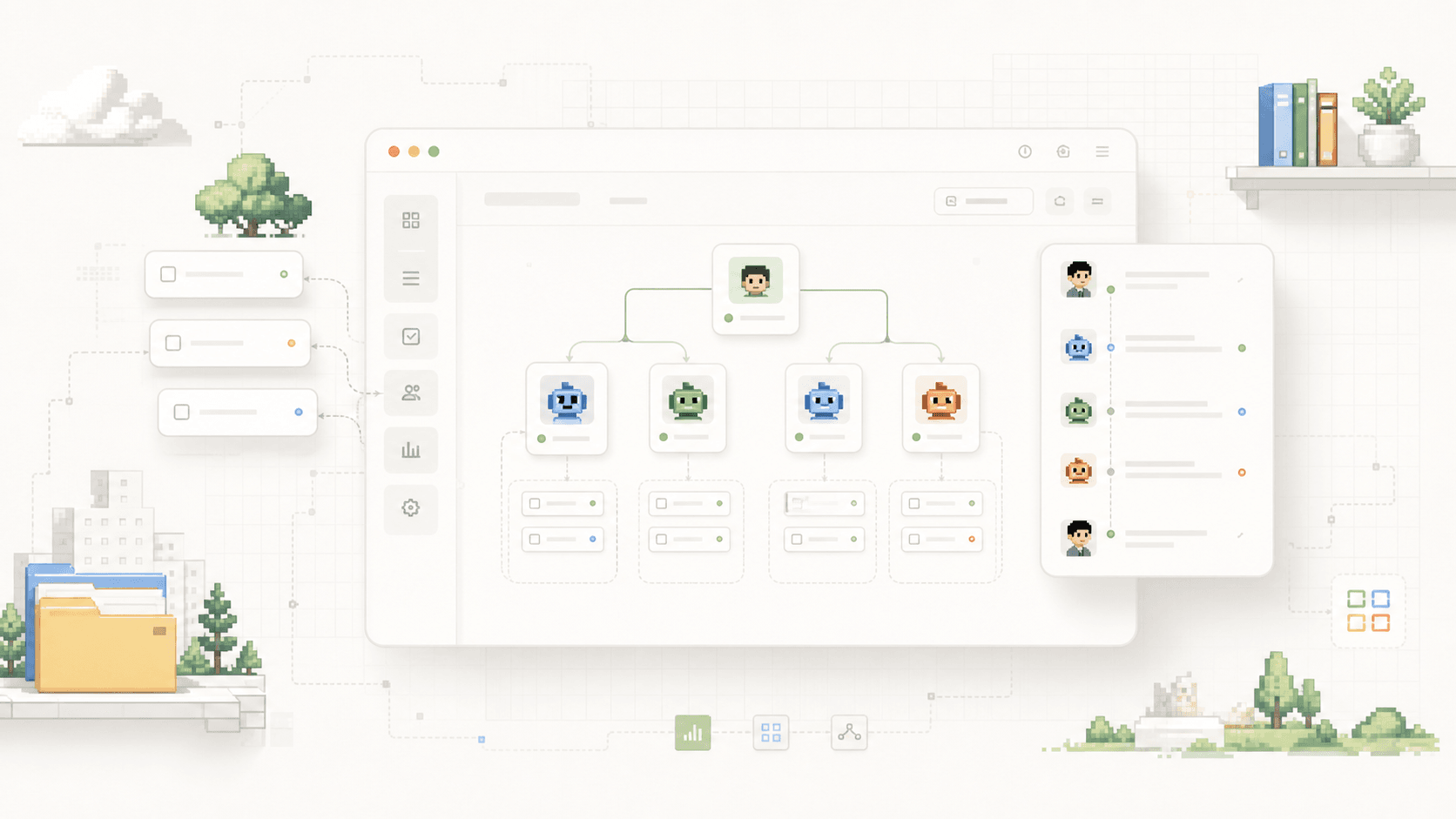
Not as a collection of prompts or invisible background sessions, but as work with a clear objective, an owner, useful context, visible progress, and a reviewable outcome. MagicAssist is built around that operating model.
Organize around outcomes, not prompts
Projects, issues, priorities, and acceptance criteria give every run a reason to exist and a definition of done.
Make progress visible by default
Humans should be able to see who is working, what changed, where an agent is blocked, and what needs review without reconstructing a session.
Let context compound
Workspace memory, project knowledge, issue history, and reusable skills should survive individual runs and improve the next piece of work.
Keep human judgment in the right places
Agents can execute at speed while people set direction, define boundaries, resolve ambiguity, and approve consequential decisions.
Keep the infrastructure yours
Run MagicAssist on a VPS, private cloud, or machines you control. Bring your own models, API accounts, runtimes, and security policies.
What changes
From scattered agent runs to a system your team can operate.
MagicAssist connects planning, delegation, execution, memory, and review. Each part reinforces the others, so adding more agents does not mean adding more coordination debt.
Plan with one shared backlog
Human priorities and agent assignments live together, with one source of truth for what should happen next.
Delegate with clear ownership
Assign work to people, agents, or squads with the objective and context attached to the issue.
Observe work as it happens
Follow live activity, progress, blockers, and handoffs without chasing updates across terminals and chats.
Review decisions in context
Comments, artifacts, status changes, and approvals stay connected to the work that produced them.
Build memory that outlives a run
Give agents scoped workspace and project knowledge instead of starting every task from an empty prompt.
Connect the tools work depends on
Bring external systems into the workflow while keeping coordination and accountability in one operating layer.
The point
The goal is not to remove people from the loop. It is to make every loop clearer.
Small teams should be able to take on ambitious work without becoming full-time supervisors of their tools. MagicAssist helps them coordinate more capacity while keeping judgment, context, and infrastructure in their control.